

 Nigerian naira
 United States (US) dollar







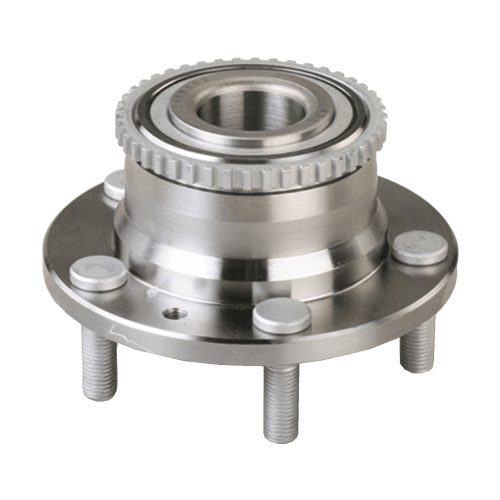


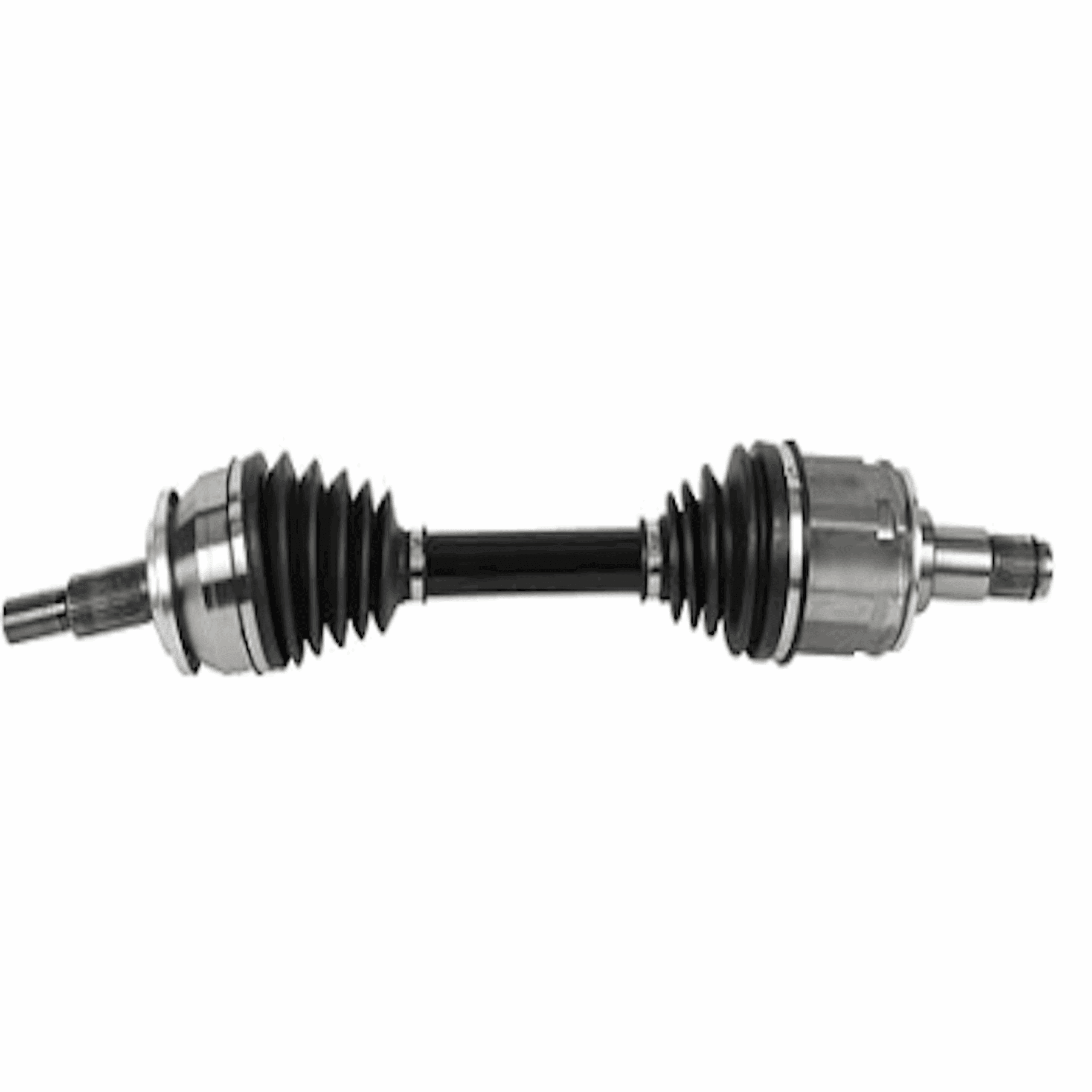

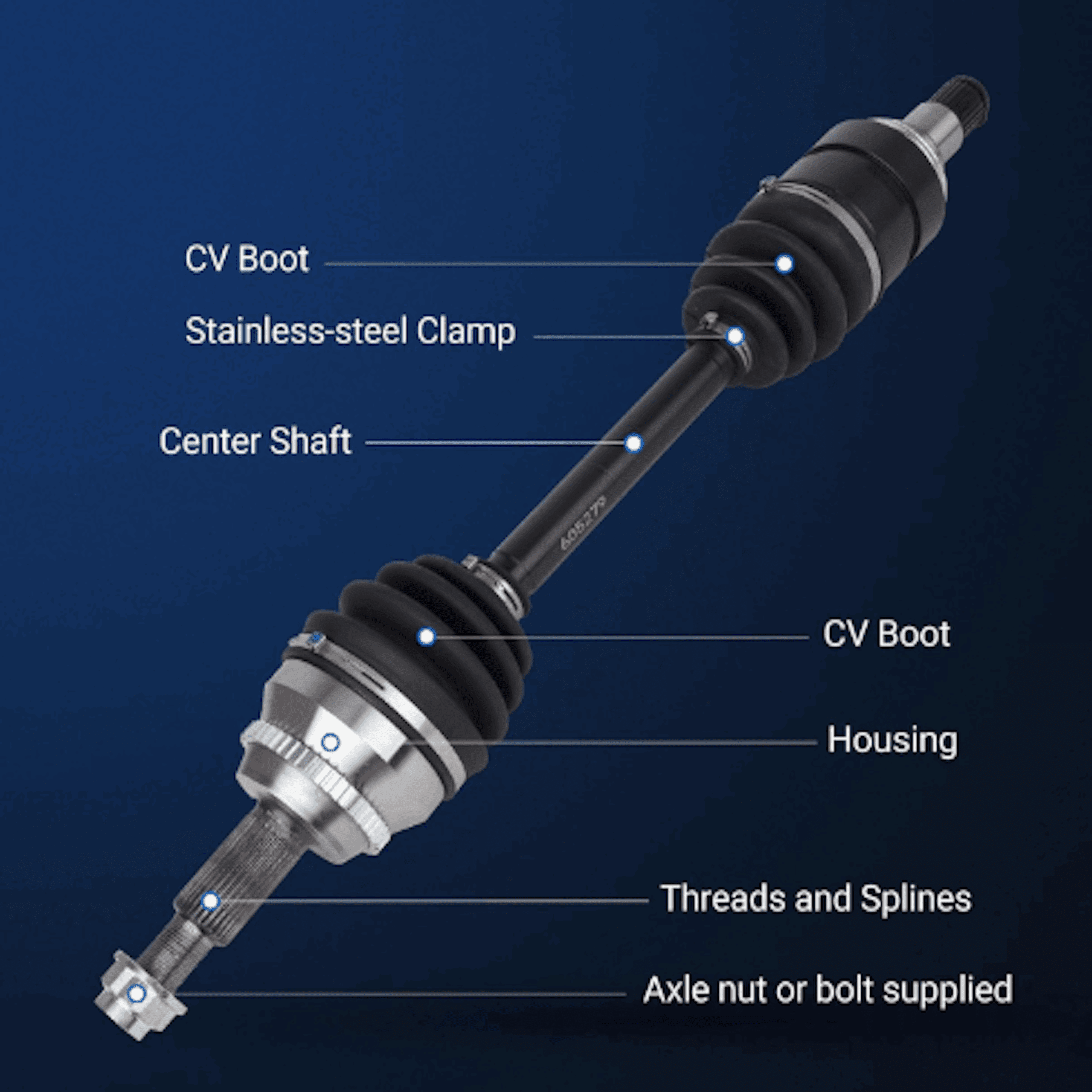

Description
About Axle shaft
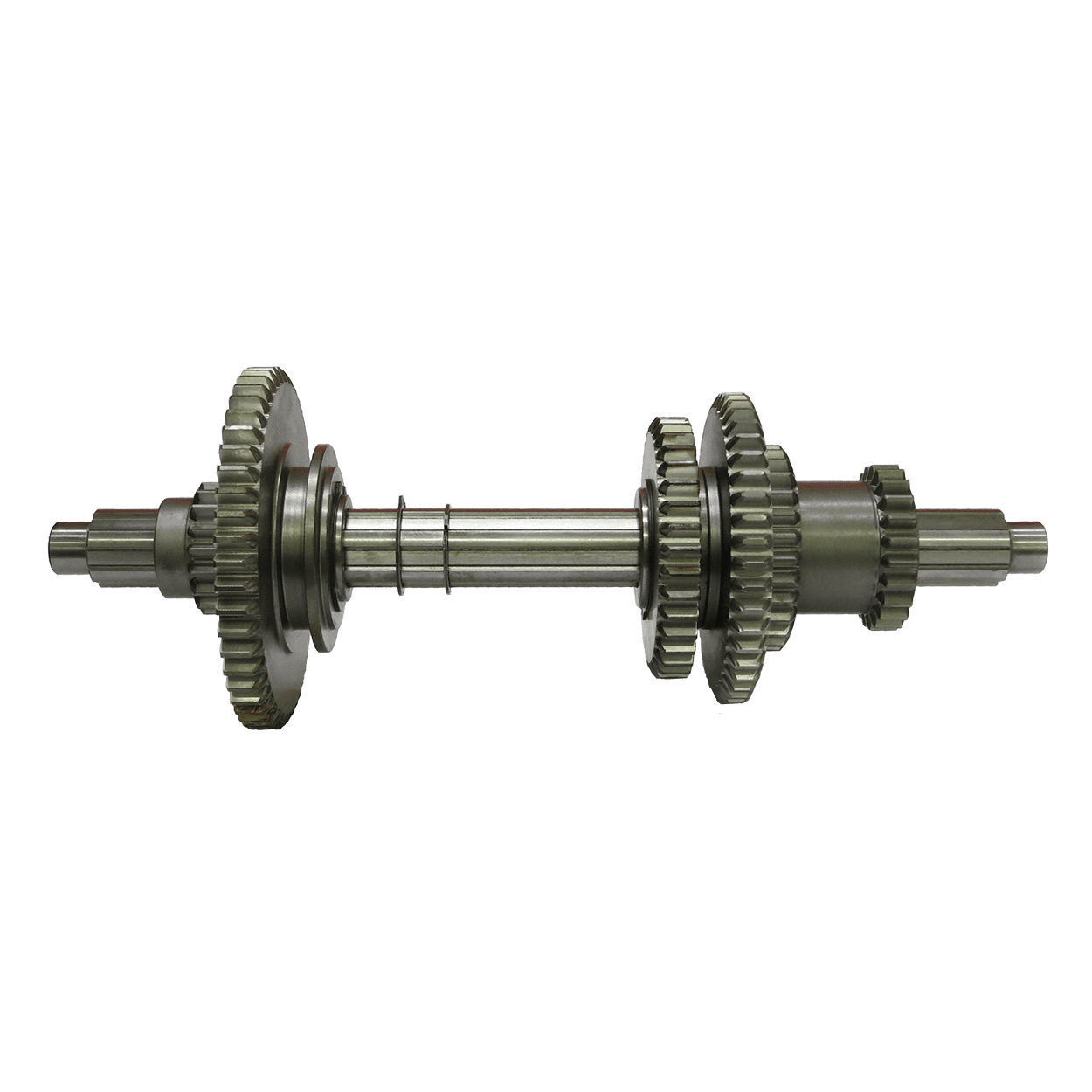
Axle shaft is a crucial component of the vehicle drivetrain. It is a cylindrical piece of metal or composite material used to transmit power from the axle differential to the wheels, enabling the wheels to rotate and move the vehicle.
The axle shaft is designed for strength and durability to withstand the forces exerted during vehicle operation. It is essential to maintain proper balance and alignment to ensure smooth and efficient power transmission.
A Toyota axle shaft comes in different types:
- 1. Front-wheel drive axle shafts: They are also called drive shafts or half shafts. They transmit power from the transaxle to the front wheels in front-wheel drive vehicles. As a result, they enable the front wheels to provide traction and steering control. They often have constant velocity (CV) joints at both ends to allow flexible movement and smooth power transmission.
- 2. Rear-wheel drive axle shafts: They are used in rear-wheel drive vehicles to transmit power from the rear differential to the rear wheels. They are critical components of the rear axle assembly, ensuring synchronized wheel rotation for stability and traction, especially in high-performance and off-road vehicles.
- 3. Four-wheel drive (4WD) and all-wheel drive (AWD) axle shafts: These axle shafts can be used interchangeably in 4WD and AWD vehicles to distribute power from the transfer case to all four wheels. They are designed for strength and durability to handle the increased torque and power distribution required for all-wheel traction. Some 4WD/AWD systems use a split axle shaft, with one shaft powering the front wheels and the other powering the rear wheels, allowing for flexible and adaptable power delivery.
- 4. Solid axle shaft: This type of axle shaft is a single, uninterrupted shaft. It is a simple and common design used in many car models. Solid axle shafts offer strength, durability, and low maintenance, making them suitable for off-road and heavy-duty applications. However, they can be less flexible and more challenging to balance, requiring careful installation and alignment.
- 5. Composite axle shaft: The composite axle shaft combines steel and other materials, such as carbon fiber or aluminum. This combination aims to leverage the strengths of each material while reducing weight, increasing strength, and improving performance. Composite axle shafts are suitable for high-performance applications where strength and weight savings are critical. They are often used in racing, off-road, and performance-tuned vehicles.
Specifications and Maintenance of Axle Shaft
Below are some common specifications of the axle shaft.
- Length:
The axle shaft’s length is determined by the distance between the differential and the wheel. It varies based on the model. For example, the Toyota Tacoma has a shaft length of 24.3 inches (617 mm) for the 2WD version and 26.4 inches (670 mm) for the 4WD version.
- Diameter:
The axle shaft’s diameter affects its strength and the fit within the wheel hub. For instance, the Range Rover has a diameter of 3.5 inches (89 mm) for the front axle shafts and 3.0 inches (76 mm) for the rear axle shafts.
- Spline Count:
The number of splines on the axle shaft end that connects to the wheel hub is referred to as the spline count. The number of splines determines the fit and power transfer. For example, the Prado has a spline count of 27 for the front axle shafts and 30 for the rear axle shafts.
- Material:
The axle shaft material impacts its durability and performance. Most modern cars use steel alloy shafts. For example, the Toyota Tundra has shafts made of 4140 steel alloy, which has high strength and toughness.
- Coating:
The axle shaft coating helps resist corrosion and wear. Common coatings include black oxide, nickel, and chrome. For example, the Honda has axle shafts with a black oxide coating for better durability.
Below are ways of maintaining the axle shaft.
- Regular inspections: It is important to check the axle shafts for cracks, damage, or wear regularly. This helps to identify problems early and fix them before they worsen. Users should also inspect the boots on the CV joints for tears or leaks.
- Proper lubrication: Users should always ensure that the CV joints and other moving parts of the axle shafts are properly lubricated. This helps to reduce friction and wear. Use the recommended lubricant by the vehicle manufacturer.
- Avoid overloading: Users should avoid overloading their vehicles. Carrying more than the recommended weight can strain the axle shafts and cause damage over time.
- Avoid aggressive driving: Users should avoid rapid acceleration, hard braking, and sharp turns, as these can put excessive stress on the axle shafts.
- Follow the service schedule: It is advisable for users to adhere to the vehicle manufacturer’s service schedule. This ensures that the axle shafts and other components are maintained in optimal condition.
How to Choose Axle Shaft
When it comes to choosing the right axle shafts for models, here are some important factors to consider:
- Understanding the Driving Needs
The driving needs and habits of car owners or drivers play an important role in choosing the right axle shafts. Do they drive more on highways, city roads, or off-road? For example, those who drive off-road frequently need axles that can withstand rough terrains and the challenges that come with them. On the other hand, an axle shaft designed for high performance and durability may be more suitable for those who drive at high speeds.
- Consider the Type of Vehicle
The type of vehicle also has an effect on choosing axle shafts. For example, a pickup truck that is used for transporting goods needs a strong and reliable axle. Meanwhile, a lightweight and fuel-efficient axle shaft can be used on a small city car.
- Brand and Quality
Choosing a trusted brand and good quality axle shafts is very important. Buyers should look for brands that are already well-known and have a good reputation for quality products. In addition, they should also consider the warranty and after-sales service provided by the axle shaft manufacturer.
- Budget
Budget is also an important factor when choosing axle shafts. Buyers should determine the budget range before purchasing and look for axle shafts that fit within that budget. However, remember that quality and durability of products are also important and should not be compromised to save a few bucks.
- Compatibility
Lastly, compatibility is an important consideration when choosing axle shafts. Make sure that the selected axle shaft is completely compatible with the vehicle’s model, year of manufacturing, and other components such as the transmission and differential. This ensures that the axle works well and avoids problems that can occur from incompatibility.
How to DIY and replace Axle Shaft
Replacing an axle shaft can be a difficult task to do. However, it can be done by following the right steps. An easy way to replace the axle shaft is to consult the repair manual. Because different models have different procedures. Below are some general procedures for replacing the axle shaft.
Gather the right tools that will be needed for the replacement. Some of the tools are mentioned above. Lift the car with a jack and place it on jack stands. Then, remove the wheel lug nuts and the wheel. After removing the wheel, the brake caliper and the brake rotor should be removed. Then, remove the wheel hub and the tie rod end. The hub and tie rod end are connected to the axle shaft. So, removing them will make it easier to remove the axle shaft.
Once the hub and tie rod end are removed, the next step is to disconnect the CV joint from the axle shaft. This step also depends on whether the CV joint is bolted or sealed. If it is bolted, remove the bolts and separate the joint from the axle shaft. If it is sealed, use a hammer to break it loose and separate it from the axle shaft.
Now, the axle shaft is almost loose. The next step is to remove the axle shaft bolts that are holding the axle shaft to the differential. Once the bolts are removed, the axle shaft can be pulled out from the differential.
Installing the new axle shaft is the reverse of the removal process. First, the new axle shaft should be fitted into the differential. Then, reattach the CV joint, followed by reconnecting the tie rod end, wheel hub, brake rotor, brake caliper, and wheel. Finally, lower the car and ensure everything is working perfectly.
It is important to note that before replacing an axle shaft, the grease should be cleaned off. This is to prevent dirt and debris from getting inside the joints or on the new axle shaft. Also, make sure to wear protective gloves when replacing an axle shaft.


