

 Nigerian naira
 United States (US) dollar






Description
Engine
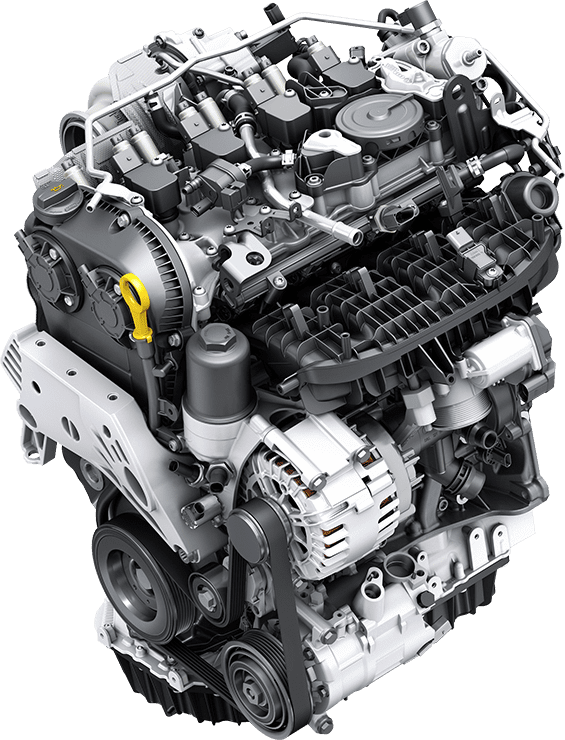
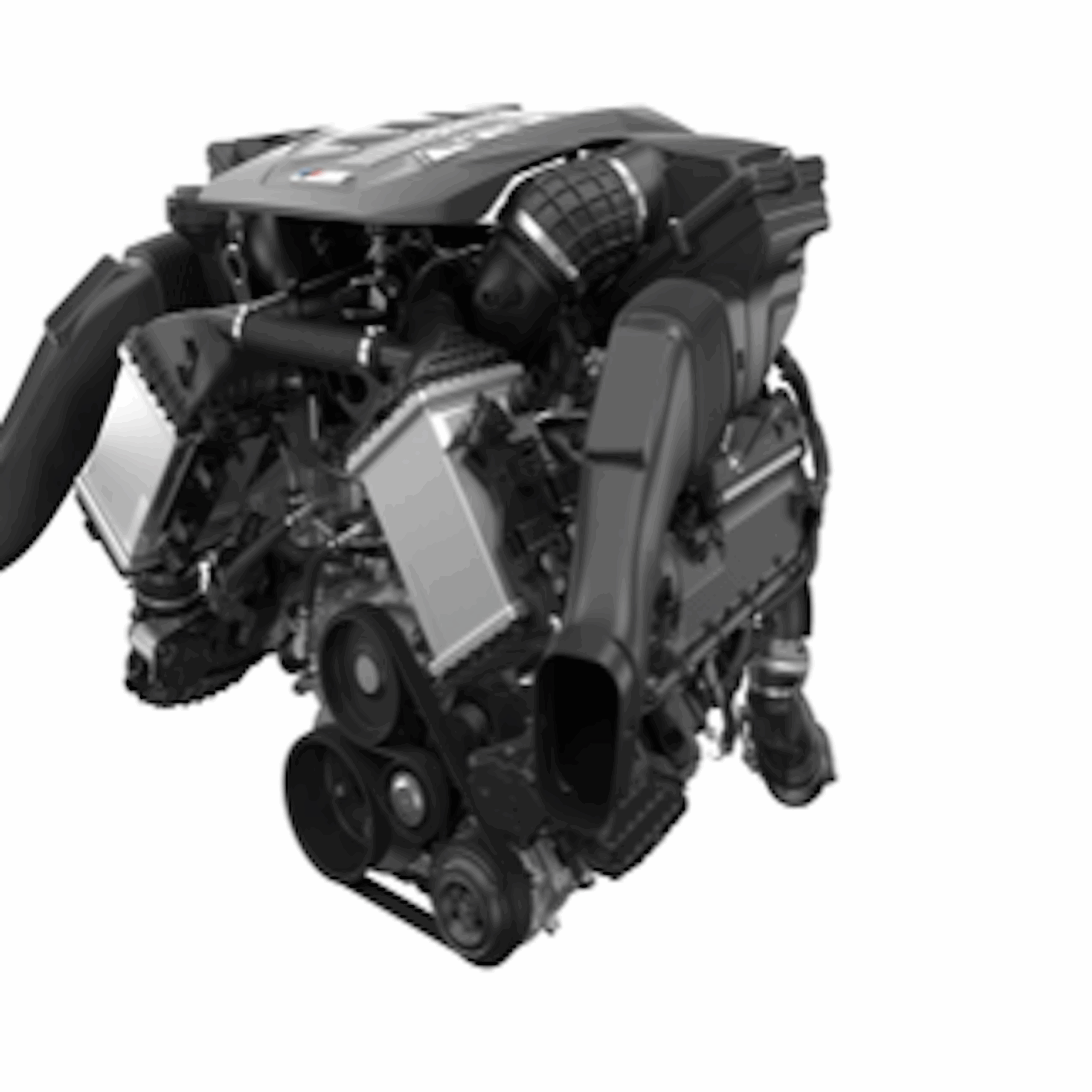
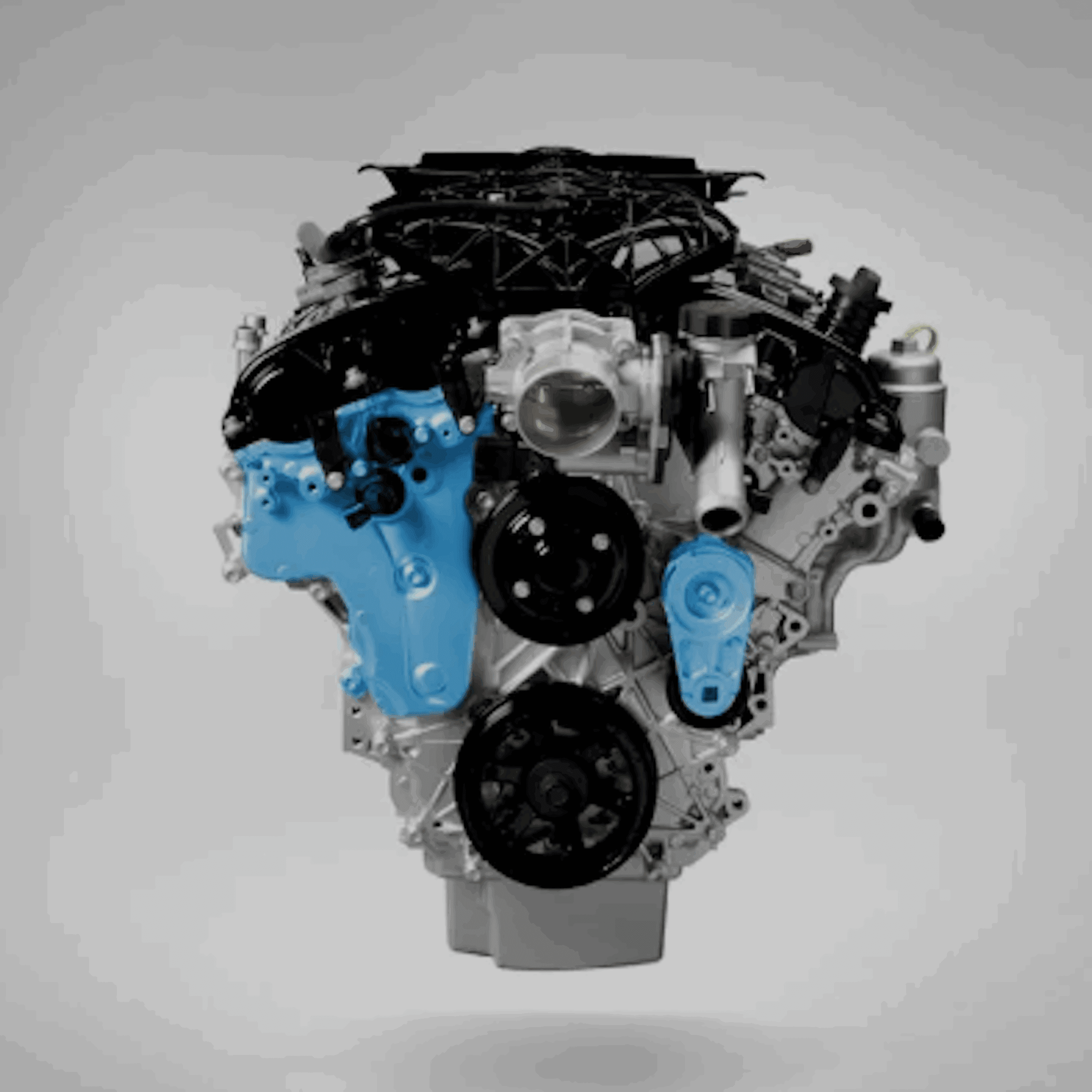
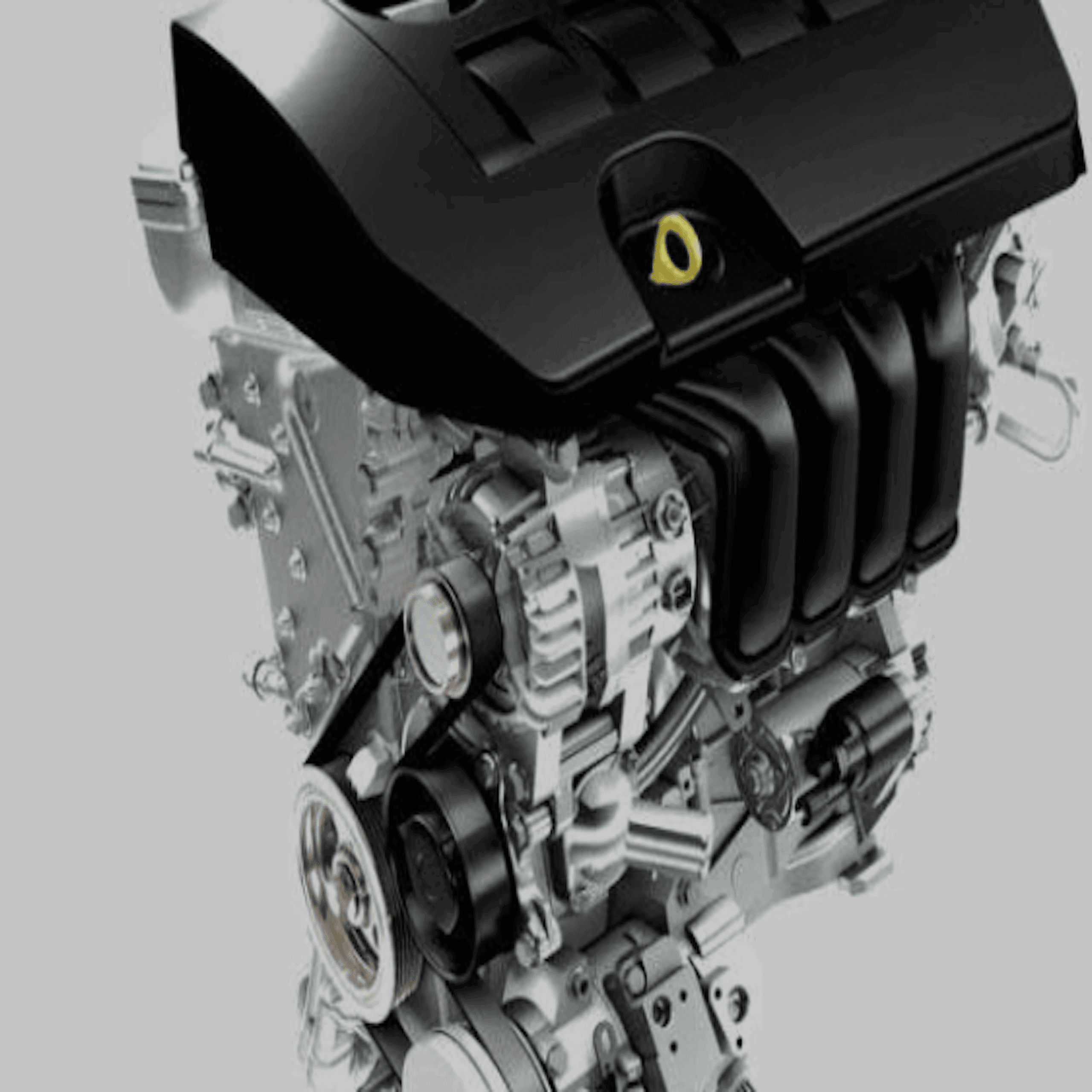
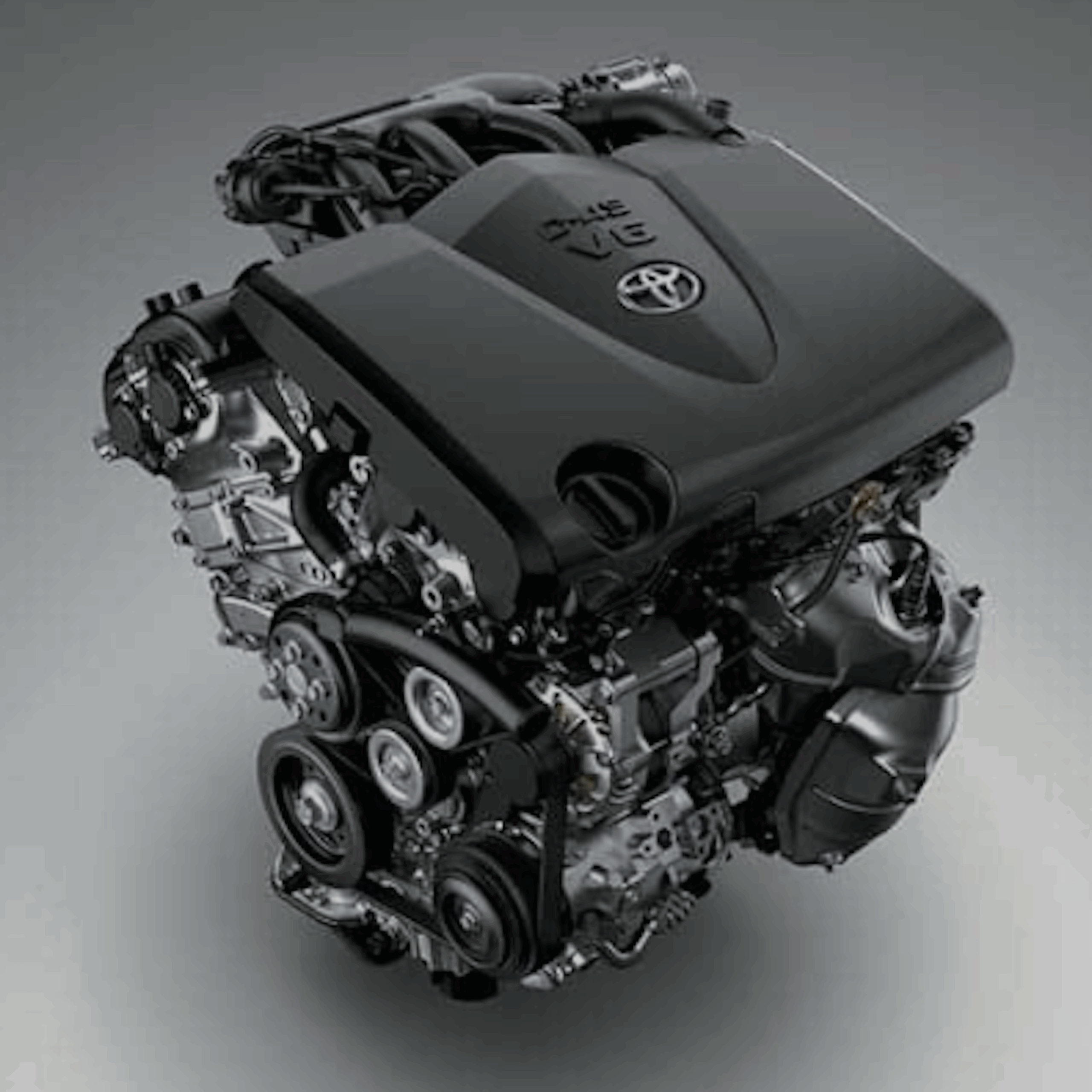
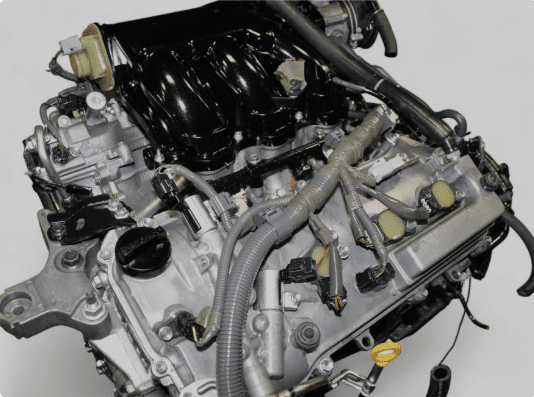
Car engines are the heart of every vehicle and are needed for performance and vehicle running. The engine engaged in energy conversion, promoting motion and powering important automotive systems. A typical car engine features different components, all performing functions targeted at driving the vehicle.
This article provides a comprehensive review of the car engine, its working principle components, and its types.
What is a Car Engine?
A car engine is the powerhouse of an automobile. It is responsible for burning fuel in an internal combustion system, converting the chemical energy into mechanical energy to drive the vehicle. The engine operates by combining air and fuel, igniting the mixture, and creating controlled explosions within its cylinders. These explosions create energy that moves the pistons, powering the car’s wheels through mechanical linkages.
All engines convert a particular form of energy to the mechanical required to propel the car’s motion. While the base energy is chemical in internal combustion engines, it is electrical in EVs. While car engines vary in size, configuration, and energy source, they perform similar energy conversion functions for smooth vehicle running.
How Does a Car Engine Work?
As mentioned above, a car engine system operates on the principle of energy conversion. In an internal combustion engine, chemical energy from fuel is transformed into mechanical energy, while in an electric vehicle, electrical energy from the electric motors is converted to mechanical energy.
In a typical combustion engine, the process begins with air and fuel intake into the engine’s cylinders. Afterward, the spark plug ignites this mixture, causing an explosion that generates heat and expands the gases, pushing the pistons downward and creating linear motion.
Next, the pistons are connected to a crankshaft via connecting rods, which convert this linear motion into rotational motion. The rotational energy is then transmitted to the drivetrain, propelling the car’s wheels and providing power to other components like the brakes and the automotive steering system.
This cycle of air intake, compression, power, and exhaust, known as the four-stroke cycle, continues, ensuring the car is running. However, modern engines employ sophisticated technologies like fuel injection systems, turbochargers, and variable valve timing to optimize efficiency and performance. On the other hand, the latest technology – electric car engines rely on electromagnetic principles to create motion, bypassing combustion entirely.
What are the Components of a Car Engine System?
An automotive engine consists of different components, all performing the function of driving the car. This section will focus on the parts of a typical internal combustion engine.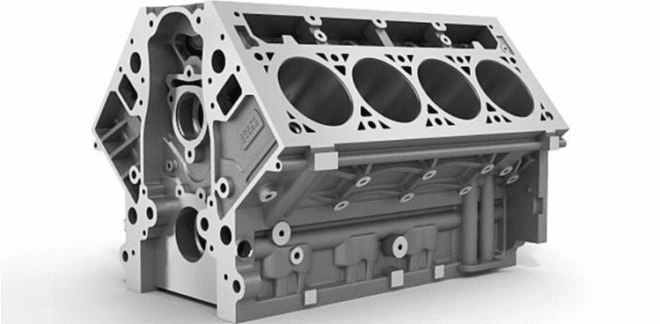
Cylinder Block
The cylinder block is the engine’s core—the most important component of the car’s engine. It houses the engine cylinders connected to the crankshaft and the pistons. The combustion process occurs within this cylinder block, propelling the crankshaft mechanism and transforming the pistons’ linear motion into rotational motion.
As the piston moves, it results in power and torque generation required for the car’s movement. The design of the cylinder block significantly impacts the engine’s power and efficiency, as it forms the base for most engine operations.
Cylinder Head
The cylinder head sits on top of the cylinder block, forming the top of the vehicle’s combustion chamber. It consists of ports, valves, spark plugs, and injectors. These valves and ports seal off the cylinder to contain combustion and control air and fuel intake and exhaust outflow. Because of the high-temperature operating condition, the cylinder head is often made from heat-resistant materials, though lightweight, to ensure optimal performance.
Piston and Connecting Rod
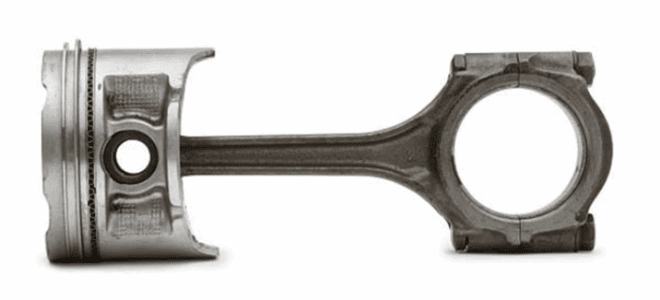
The piston is a cylindrical component linked to the crankshaft via the connecting rods. This car part moves up and down inside the cylinder, converting energy from combustion into mechanical motion. The connecting rod (or piston rod) transmits the pistons’ linear motion into rotational energy. This constant piston motion aids optimum engine running.
Piston Ring
The piston rings are small circular features fitted around the pistons. They are not conspicuous but offer vital functions. They help tight seal the pistons within the cylinder block, helping maintain compression and prevent the leaking of combustion gases. They also help regulate oil consumption by scraping excess oil off the cylinder walls.
Crankshaft
The crankshaft’s primary function is to convert the linear motion of the pistons into rotational motion, which powers the drivetrain and eventually propels the car. Because the crankshaft is often in constant motion, it is often manufactured from forged steel or cast iron, which is made from precision manufacturing.
Crankcase or Oil Pan
As the name suggests, it is an enclosure for the crankshaft. However, it also supports the cylinder block, connecting rods, and pistons. In addition, it serves as a reservoir for engine oil, helping lubricate the different engine components.
Camshaft
The camshaft assists in converting the crankshaft’s rotational motion into linear motion, triggering the valves. Its lobes push the lifters or followers, causing the valves to open or close to allow air and fuel into the cylinders and exhaust gases out of the cylinders.
Fuel Injector
Its primary role is to deliver fuel into the combustion chamber or intake manifold at precise intervals and pressures. Newer vehicles contain sophisticated fuel injectors that ensure fuel atomization, improving combustion efficiency and reducing emissions.
Spark Plug
The spark plug initiates the power stroke of the engine cycle by igniting the air-fuel mixture within the combustion chamber. It generates a spark by forming an electrical arc between its electrodes, causing the car ignition to start, accelerate, and switch between gears.
Timing Belt or Chain
The timing belt or chain synchronizes the rotation of the crankshaft and camshaft, ensuring that the valves open and close at the correct time. As the crankshaft rotates, it turns the camshaft via the timing belt. The timing chain then ensures that the camshaft’s lobes open and close the valves at the correct time relative to the movement of the pistons.
Types of Car Engines
Car engines come in different designs, shapes, and configurations. This section explores the common types of car engine systems.
Inline Engines
Inline engines are sometimes called straight engines because of their design configuration. These engines feature the engine cylinders arranged side by side and upright. This engine type is popular because of its simplicity and compact design, accommodating more cylinders for better efficiency.
In addition, the configuration allows for fewer components, reducing engine weight and manufacturing costs. However, inline engines are more common in smaller vehicles, particularly sedans, as they may generate less power for more sophisticated vehicles.
V Engines
V engines typically feature two rows of cylinders in a V shape. The design arranges the cylinders at a 60-degree angle, which allows for a more compact shape and provides higher power output, making them a good fit for performance and luxury cars.
The standard V engine variants include V6 and V8, with the number indicating the number of cylinders and power capacity. However, the complex design makes it more expensive to manufacture.
Boxer or Flat Engines
Boxer or flat engines have the cylinders arranged horizontally in two opposing rows. This design lowers the center of gravity, enhancing vehicle stability and handling. However, boxer engines are not common and are often reserved for sports cars, and luxury vehicles like SUVs.
They showcase smooth operation and reduced vibrations due to the pistons’ opposing movement. However, compared to inline or V engines, they are more complex and expensive to produce and maintain.
Rotary Engines
This type of automotive engine generates power using a triangular rotor instead of traditional pistons. Rotary engines are compact and lightweight, offering a high power-to-weight ratio. While they operate smoothly and quietly, they exhibit reduced fuel efficiency with increased emissions, causing fewer applications.
Electric Car Engines
Unlike internal combustion engines (ICE), electric cars utilize an electric motor as their engine. This device relies on electricity stored in the batteries to generate motion, offering zero emissions and high energy efficiency. The electric motors provide instant torque and power and operate quietly. However, their performance relies on the batteries and may be influenced by charging time.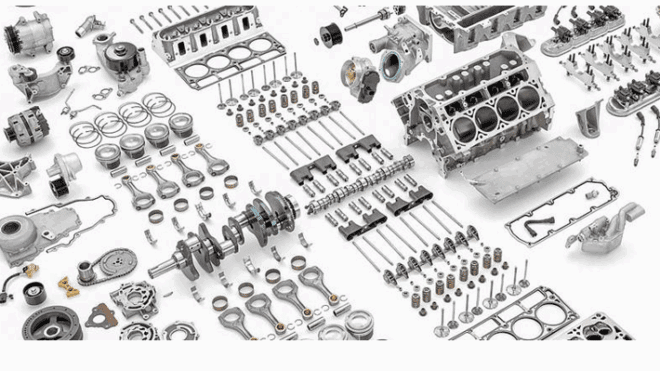
Piston and Connecting Rod
The piston is a cylindrical component linked to the crankshaft via the connecting rods. This car part moves up and down inside the cylinder, converting energy from combustion into mechanical motion. The connecting rod (or piston rod) transmits the pistons’ linear motion into rotational energy. This constant piston motion aids optimum engine running.
Piston Ring
The piston rings are small circular features fitted around the pistons. They are not conspicuous but offer vital functions. They help tight seal the pistons within the cylinder block, helping maintain compression and prevent the leaking of combustion gases. They also help regulate oil consumption by scraping excess oil off the cylinder walls.
Crankshaft
The crankshaft’s primary function is to convert the linear motion of the pistons into rotational motion, which powers the drivetrain and eventually propels the car. Because the crankshaft is often in constant motion, it is often manufactured from forged steel or cast iron, which is made from precision manufacturing.
Crankcase or Oil Pan
As the name suggests, it is an enclosure for the crankshaft. However, it also supports the cylinder block, connecting rods, and pistons. In addition, it serves as a reservoir for engine oil, helping lubricate the different engine components.
Camshaft
The camshaft assists in converting the crankshaft’s rotational motion into linear motion, triggering the valves. Its lobes push the lifters or followers, causing the valves to open or close to allow air and fuel into the cylinders and exhaust gases out of the cylinders.
Fuel Injector
Its primary role is to deliver fuel into the combustion chamber or intake manifold at precise intervals and pressures. Newer vehicles contain sophisticated fuel injectors that ensure fuel atomization, improving combustion efficiency and reducing emissions.
Spark Plug
The spark plug initiates the power stroke of the engine cycle by igniting the air-fuel mixture within the combustion chamber. It generates a spark by forming an electrical arc between its electrodes, causing the car ignition to start, accelerate, and switch between gears.
Timing Belt or Chain
The timing belt or chain synchronizes the rotation of the crankshaft and camshaft, ensuring that the valves open and close at the correct time. As the crankshaft rotates, it turns the camshaft via the timing belt. The timing chain then ensures that the camshaft’s lobes open and close the valves at the correct time relative to the movement of the pistons.
Types of Car Engines
Car engines come in different designs, shapes, and configurations. This section explores the common types of car engine systems.
Inline Engines
Inline engines are sometimes called straight engines because of their design configuration. These engines feature the engine cylinders arranged side by side and upright. This engine type is popular because of its simplicity and compact design, accommodating more cylinders for better efficiency.
In addition, the configuration allows for fewer components, reducing engine weight and manufacturing costs. However, inline engines are more common in smaller vehicles, particularly sedans, as they may generate less power for more sophisticated vehicles.
V Engines
V engines typically feature two rows of cylinders in a V shape. The design arranges the cylinders at a 60-degree angle, which allows for a more compact shape and provides higher power output, making them a good fit for performance and luxury cars.
The standard V engine variants include V6 and V8, with the number indicating the number of cylinders and power capacity. However, the complex design makes it more expensive to manufacture.
Boxer or Flat Engines
Boxer or flat engines have the cylinders arranged horizontally in two opposing rows. This design lowers the center of gravity, enhancing vehicle stability and handling. However, boxer engines are not common and are often reserved for sports cars, and luxury vehicles like SUVs.
They showcase smooth operation and reduced vibrations due to the pistons’ opposing movement. However, compared to inline or V engines, they are more complex and expensive to produce and maintain.
Rotary Engines
This type of automotive engine generates power using a triangular rotor instead of traditional pistons. Rotary engines are compact and lightweight, offering a high power-to-weight ratio. While they operate smoothly and quietly, they exhibit reduced fuel efficiency with increased emissions, causing fewer applications.
Electric Car Engines
Unlike internal combustion engines (ICE), electric cars utilize an electric motor as their engine. This device relies on electricity stored in the batteries to generate motion, offering zero emissions and high energy efficiency. The electric motors provide instant torque and power and operate quietly. However, their performance relies on the batteries and may be influenced by charging time.


